
Historic Downtown Abingdon, VA
Some towns spread their history out across strip malls and highway exits, forcing you into a car to see anything worth seeing. Abingdon does the opposite. Its historic downtown district covers roughly twenty square blocks, and nearly everything worth doing here fits inside that footprint. That makes it one of the rare places where you can genuinely park once, or skip the car altogether, and spend an entire day, or a full weekend, on foot.
What Makes This District Different
Abingdon holds the distinction of being the oldest town west of the Blue Ridge, and the downtown district still carries that weight in its architecture. Main Street is lined with brick storefronts and commercial buildings that have been standing, in one form or another, since the town's earliest decades. Some now house restaurants and shops. Others hold galleries, theaters, and museums. The result is a downtown that feels lived-in rather than staged, which is a distinction that matters more than it sounds like it should.
The historic district isn't organized around a single theme park version of the past. It's organized around the actual life of a working Appalachian town: churches, an old courthouse, a former freight depot, a converted schoolhouse, and a theater that started out as something else entirely. Layer in a few centuries of continuous use, and you get a downtown with texture, not just a preserved facade.
Abingdon's position on the old Great Valley Road, the historic route connecting Pennsylvania and the Shenandoah Valley down toward the Cumberland Gap, made it a natural stopping point for settlers pushing westward through the 1700s. Washington County was formed in 1776, and Abingdon was incorporated as its county seat two years later, in 1778. That early significance as a crossroads town shows up in the density and variety of what survives downtown today. Few towns this size in Appalachia can claim a theater, a nationally accredited art museum, a converted rail depot turned artist studio complex, and a burial ground older than the town's own charter, all within the same walkable footprint.
The Anchors Worth Building a Day Around
If you only have a few hours, three stops give you a strong sense of what makes this district worth visiting.
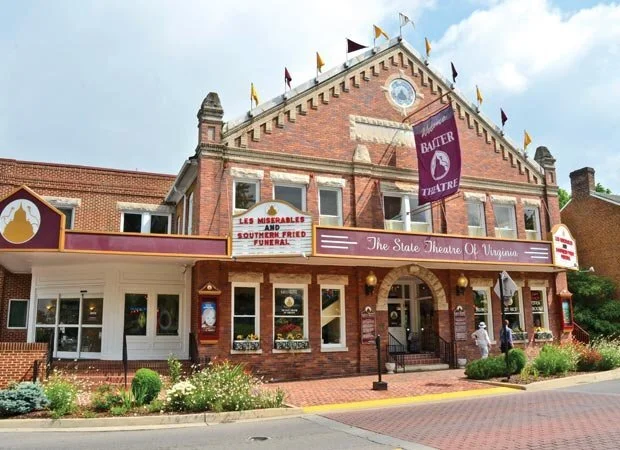
The Barter Theatre sits at one end of downtown, and it is worth knowing before you arrive that this is not a small-town community playhouse. It is the longest continuously running professional Equity theatre in the country, founded in 1933 during the Great Depression, when Robert Porterfield let audiences pay their way in with produce instead of cash. It has been staging real, professional productions ever since.
A short walk away, the William King Museum of Art holds its own distinction: it is Virginia's only nationally accredited art museum west of Roanoke. Housed in a 1913 building that once served as the Abingdon Male Academy, it partners with the Virginia Museum of Fine Arts and rotates roughly nine exhibitions a year, so there is rarely a bad time to stop in. The museum's campus has had some construction activity recently as part of a site improvement project, so it's worth a quick check of current hours before you plan your visit.
Round it out with the Arts Depot, a former Norfolk and Western railroad freight station converted in 1990 into working artist studios and galleries. Unlike a lot of arts venues, the artists here are often actually present and working, which makes for a more interesting stop than a typical gallery walk.
If your visit stretches into the evening, or if you're looking for a quieter, less curated slice of local culture, the Southwest Virginia Cultural Center and Marketplace serves as headquarters for The Crooked Road, Virginia's heritage music trail. Jam nights and a summer concert series give visitors a chance to hear old-time and bluegrass music played by the people who actually keep the tradition alive, rather than a staged performance built for tourists.
For those interested in the town's quieter, older history, Sinking Spring Cemetery sits right on Main Street and holds more than 3,000 burials dating back to the 1770s, including two Virginia governors and several Revolutionary War veterans. It's an easy addition to a downtown loop and offers a different, more contemplative pace than the theater and museum stops.
How the District Fits Together on Foot
What ties these stops together is the scale of the district itself. None of it requires a drive. From the Barter Theatre to the William King Museum is a comfortable walk, and the Arts Depot sits close enough to fold into the same loop. Main Street itself does a lot of the connective work, lined as it is with shops, cafes, and places to eat that make natural pause points between the bigger attractions.
That walkability is one of the real advantages of staying somewhere central. Moore on Main sits right on East Main Street, inside the historic district itself, which means a morning spent wandering toward the theater or the museum ends without a drive back to a hotel on the edge of town. You are already there.
Building in Time to Eat
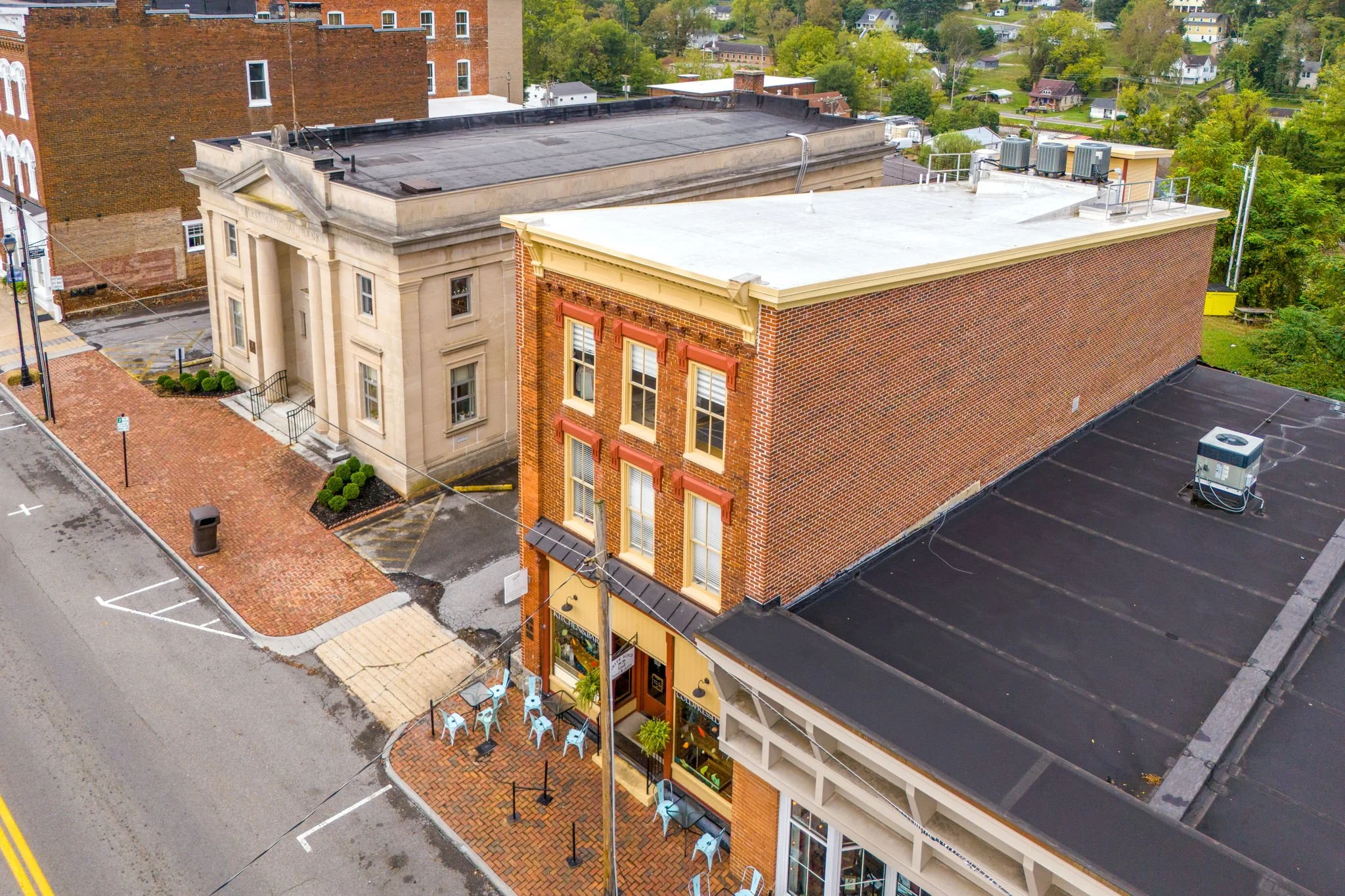
A day spent covering twenty blocks of history and art works better with a good meal built into it, and this is where Dawn & Dusk, the restaurant at Moore on Main, earns its place in the conversation. It sits within the same walkable stretch of downtown, which makes it an easy stop for brunch after a morning at the museum, or dinner after an evening show at the Barter. You can find the current menu at mooreonmain.com/dawn-dusk if you want to plan the timing of your day around it.
Timing Your Visit
Downtown Abingdon has a different personality depending on when you visit. Weekday mornings tend to be quiet, with locals running errands and shopkeepers setting up for the day, which makes for a pleasant, unhurried walk if you're not in a rush. Weekends bring more visitors and a livelier feel, especially in the evening when the Barter Theatre's marquee lights up and Main Street's restaurants fill in around show times.
Summer brings the added layer of the Virginia Highlands Festival, a ten-day event each July and August that spreads arts, crafts, antiques, and live music across much of downtown. If your visit happens to overlap with it, expect a busier, more energetic version of the district described here, and plan accordingly with earlier reservations and more advance planning for parking.
A Downtown Built for Slowing Down
The thing about a twenty-block historic district is that it resists the urge to rush. There is no single must-see attraction that dominates the others here. Instead, there is a theater, a museum, working artist studios, old cemeteries, quiet alleys with their own frontier history, and a Main Street that ties it all together. The right approach is not to check every box in one afternoon, but to pick two or three stops, walk the distance between them, and let the town's pace set yours.
Whether you're in town for one night or three, staying inside the historic district itself, rather than on its outskirts, changes how the whole visit feels. Abingdon is a town built for walking, and downtown is where nearly all of that walking pays off.
