
The Wolf Hills Legend: How Abingdon, Virginia Got Its Name
Every town has a founding story, but not many of them still have a physical location you can walk to. Abingdon does. Before it was Abingdon, this stretch of Southwest Virginia was known as Wolf Hills, and the story behind that name is one of the first things worth knowing before you spend a weekend here. It sets the tone for a town that treats its past less like a museum exhibit and more like something you're still allowed to walk through.
Daniel Boone, a Bad Night, and a Cave on Courthouse Hill
The year was 1760. Daniel Boone and a hunting party had made camp near a cave at the crest of what is now known as Courthouse Hill, in the heart of downtown Abingdon. During the night, a pack of wolves attacked their dogs. It was violent enough, and memorable enough, that when the men moved on, they carried the name Wolf Hills with them. That name stuck to this settlement for decades before it was formally renamed Abingdon in the 1770s.
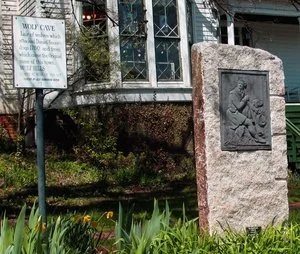
It helps to picture what this land actually looked like at the time. There was no Main Street, no brick storefronts, no theater marquee. This was dense, unbroken forest at the edge of a frontier that European settlers had barely begun to push into.
Wolves were common enough in these hills that naming a place after an encounter with them wasn't unusual, but the fact that this particular story survived, retold across generations, says something about how central it became to the town's early identity. Long before Abingdon had an official name, it had a reputation, and that reputation traveled with hunters, traders, and settlers moving through the region.
Why the Name Eventually Changed
Wolf Hills carried the town's identity for roughly a decade and a half before local leaders opted for something that echoed back to Abingdon, England, a nod to the town's early Anglo-American roots and its aspirations as a proper settlement rather than a rough frontier outpost. The renaming didn't erase the older story, though. It simply layered a new identity on top of the old one, which is a pattern that shows up again and again in how Abingdon has treated its history. Nothing here gets discarded outright. It gets built over, literally and figuratively, which is exactly how a cave from 1760 ended up sitting beneath a building on a modern alley.
What makes this more than campfire lore is that the cave is still there. The entrance sits beneath a building on Plumb Alley, just off Main Street, and a historical marker nearby lays out the details for anyone curious enough to go looking. It is easy to walk right past it if you don't know what you are looking at, which is fairly true of a lot of Abingdon's history. The town does not shout about its past. It tucks it into alleyways and building foundations and lets you find it.
Boone's connection to this part of Virginia runs deeper than one bad night with the wolves, too. He hunted and traded through this region for years, and the roads and trails that grew out of that early frontier activity eventually shaped the town that stands here now. Abingdon owes a fair amount of its layout, and its position as a crossroads town, to that early frontier traffic. Long hunters like Boone followed game trails and old Native American paths that later became wagon roads, and those wagon roads eventually became the Main Street you'd recognize today. It's worth remembering, when you're walking a paved sidewalk downtown, that the route beneath your feet has been in continuous use for longer than the United States has existed.
This same frontier history connects directly to some of Abingdon's other notable sites. The Muster Grounds, where the Overmountain Men gathered before marching to the Battle of Kings Mountain in 1780, sits on the same general network of frontier trails and settlements that grew up in the wake of Boone-era exploration. Wolf Hills wasn't an isolated curiosity. It was one node in a much larger web of frontier activity that eventually produced the town Abingdon became.
Finding the Cave Today
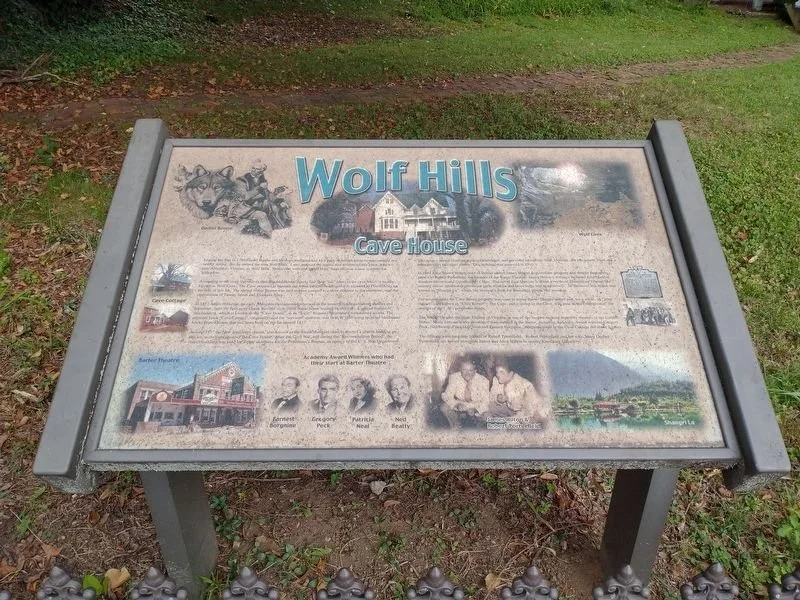
If you want to see it for yourself, head to Plumb Alley, a short walk from most anywhere downtown. There is no formal tour or ticketed entrance, just the marker and the cave mouth itself, which is part of the appeal. This is not a polished attraction built for visitors. It is a genuine piece of frontier history that happens to sit in the middle of a town that grew up around it.
Give yourself fifteen or twenty minutes here, more if you like reading historical markers slowly. It pairs naturally with a longer walk through the historic downtown district, since Plumb Alley connects easily to Main Street and the rest of the twenty-block area that makes up Abingdon's core.
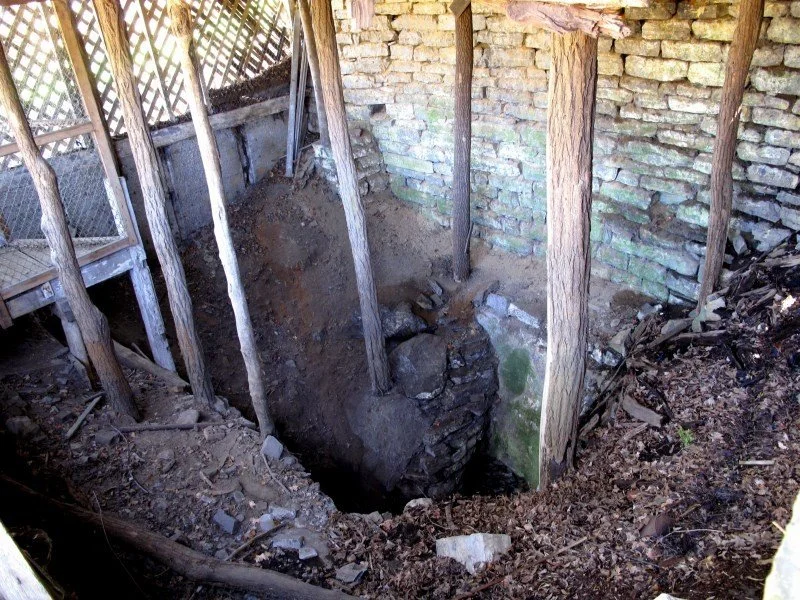
Morning tends to be the best time to visit, when the alley is quiet and the light filters through in a way that makes the whole scene feel a little more like stepping backward in time. Because this isn't a staffed attraction, there's no wrong time of day to stop by, but avoiding the busier midday stretch of downtown foot traffic makes for a more contemplative visit if that's what you're after.
It's also worth noting that this stop works well regardless of the season. Unlike some of Abingdon's outdoor attractions, which depend heavily on weather and trail conditions, the cave entrance and its marker are accessible year-round, rain or shine, making it a reliable addition to an itinerary even if the forecast doesn't cooperate with your other plans.
Making a Morning of It
A visit to the Wolf Hills cave site works well as the opening chapter of a longer day downtown. From Plumb Alley, it is an easy stroll to the Barter Theatre, the William King Museum of Art, and the shops and galleries that line Main Street. If you are staying nearby, this is one of the advantages of a place like Moore on Main, right on East Main Street: you can start the morning with the Wolf Hills story a few blocks away and end up back at Dawn & Dusk for lunch without ever needing a car.
Dawn & Dusk, the restaurant at Moore on Main, tends to fit naturally into a morning like this. A slower breakfast before you set out, or a relaxed lunch once you have walked the alley and the block or two around it, gives the day a good rhythm without feeling like you are rushing between stops. If you want a sense of what that looks like, the menu is worth a look at mooreonmain.com/dawn-dusk.
Why This Story Matters for a Visit
It would be easy to treat the Wolf Hills legend as a piece of trivia, something for a plaque and nothing more. But it says something real about how Abingdon holds onto its history. This is a town that was shaped by frontier hunters, traders, and settlers long before it had the brick storefronts and theater marquees it is known for today. Walking past the cave entrance on Plumb Alley is a reminder that all of that came from somewhere, and that somewhere is still here, underneath a building, a few steps off Main Street.
Take your time with it. Abingdon rewards visitors who are willing to slow down and look closely, and the Wolf Hills story is as good a place to start as any. From there, the rest of downtown, the theater, the museum, the galleries, and a good meal, is all within easy walking distance, whether you're staying the night at Moore on Main or just passing through for the day.
