
If you only plan one evening activity during a visit to Abingdon, there's a strong case for making it a night at the Barter Theatre. This isn't a small community playhouse padding out a tourist brochure. It's a genuinely significant American theater with a history as compelling as anything you'll see on its stage, and understanding that history changes how you experience a night there.
How a Depression-Era Bargain Built a National Theater
The Barter Theatre opened its doors on June 10, 1933, in the depths of the Great Depression. Its founder, Robert Porterfield, was an out-of-work actor from Southwest Virginia who noticed a strange mismatch: New York was full of hungry, unemployed actors, while his home region was full of farmers with produce they couldn't sell. His solution became the theater's founding idea and its name. Admission was set at around forty cents, or the equivalent in vegetables, dairy, or livestock, under the slogan "With vegetables you cannot sell, you can buy a good laugh."
The idea worked. By the end of that first season, the Barter Company had cleared just a few dollars in cash, but the theater survived, and its reputation grew well beyond Southwest Virginia. Playwrights including Tennessee Williams and Thornton Wilder reportedly accepted Virginia hams in place of standard royalties in the theater's early years, and the bartering tradition became part of its identity rather than just a wartime necessity. George Bernard Shaw, a committed vegetarian, is said to have requested spinach instead when the Barter approached him for the rights to one of his plays, a detail that has become one of the theater's most repeated bits of lore.
Porterfield himself, a Saltville, Virginia native, had gone to New York in pursuit of a Broadway acting career before the Depression forced his hand. He returned home with roughly twenty fellow out-of-work actors and built something that, by any reasonable measure, shouldn't have survived its first season. The fact that it not only survived but grew into a nationally recognized institution says a great deal about both Porterfield's persistence and the genuine appetite for live theater in a region that many outsiders assumed had little use for it.
The theater did go dark for a stretch during World War II, from 1942 to 1945, as actors and staff, including Porterfield, were drafted or enlisted. Porterfield returned to Abingdon after the war to reopen the theater, and it was in the years immediately following that the state formally recognized it with its new title.
In 1946, the Commonwealth of Virginia designated the Barter as the official State Theatre of Virginia, an honor it still holds. It also carries a distinction that matters a great deal within the theater world: it is the longest continuously running professional Equity theatre in the United States, meaning it has employed union actors, season after season, longer than any other theater in the country.
What to Expect from a Production
Nearly a century of continuous operation tends to show in the quality of what makes it to the stage. The Barter produces a full season of comedies, dramas, musicals, and original Appalachian works, often drawing professional actors with real regional and national credits. If you're used to community theater, expect something with noticeably more polish.
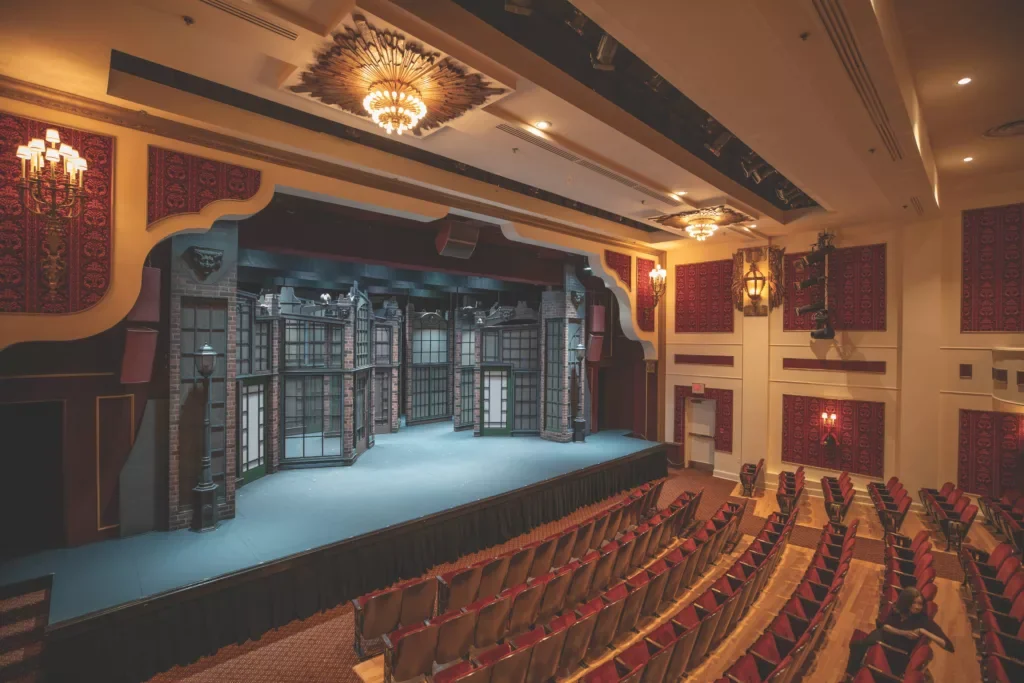
The Historic Main Stage itself has its own layered past. The building dates back to the 1830s and originally served as a Federal-style church before later becoming Abingdon's town hall, an opera house, and even a jail before Porterfield transformed it into a theater. That history is part of what gives a night at the Barter its particular atmosphere. You're not sitting in a generic black box theater. You're sitting inside a building that has been central to this town for nearly two centuries.
The Barter also expanded over the years to meet growing demand. A second stage opened across the street in 1961, giving the company room to run additional productions alongside the main stage's schedule. Since then, the theater has drawn a long list of actors who got early or formative experience there before moving on to national careers, a point of local pride that comes up often in conversations with longtime Abingdon residents. The company also has a notable touring history, including performances abroad, that helped cement its reputation well beyond the borders of Southwest Virginia.
More recently, the Barter has taken on programming tied to VA250, the multi-year commemoration of America's 250th anniversary. An original production called Kings Mountain, dramatizing the events surrounding the pivotal 1780 battle that Southwest Virginia's own Overmountain Men helped win, runs in the fall of 2026, giving theatergoers a chance to see the region's Revolutionary War history brought to the stage in a way that ties directly into the town's own founding story.
Planning a Night Around a Show
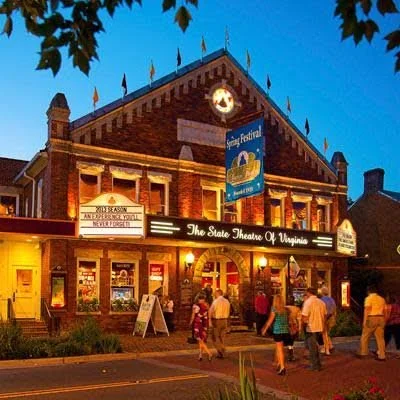
A show at the Barter works best as the centerpiece of an evening rather than a rushed stop squeezed between other plans. Main Street around the theater tends to take on a different energy on performance nights, with pre-show dinners and post-show drinks becoming something of a local ritual.
Give yourself time before curtain to walk the block, and consider building a meal into the plan rather than treating it as an afterthought. If you're staying at Moore on Main, just down East Main Street, the timing works naturally: small plates and a glass of wine at Dawn & Dusk beforehand, followed by a short walk to the theater, means you're not rushing to make curtain time. The menu is worth a look ahead of time at mooreonmain.com/dawn-dusk, especially if you want to plan around a specific show time.
A Few Practical Notes for First-Timers
Ticket demand can run high for popular productions, especially during peak season and around events like the Virginia Highlands Festival, so booking ahead is worth the effort. Parking downtown is generally manageable but tightens up on performance nights, which is another point in favor of staying somewhere within walking distance rather than driving in for the evening.
Dress is casual to smart-casual for most performances. There's no strict dress code, but a good number of visitors treat a night at the Barter as an occasion worth dressing up a little for, which fits the overall feel of the place.
Why This Theater Is Worth the Trip
A lot of small towns have a theater. Very few have one with this much genuine history behind it, or this much continued relevance nearly a century after it started. The Barter Theatre isn't a preserved relic. It's a working, professional theater that happens to have started with an idea good enough to survive the Great Depression and outlast almost every other theater company in the country.
For a first visit, come with a little context on how the place started. It makes the whole evening feel less like tourism and more like stepping into a genuinely ongoing story, one that's been playing out on that same stage, in one form or another, since 1933.
