
The Arts Depot: Abingdon's Working Artist Studios
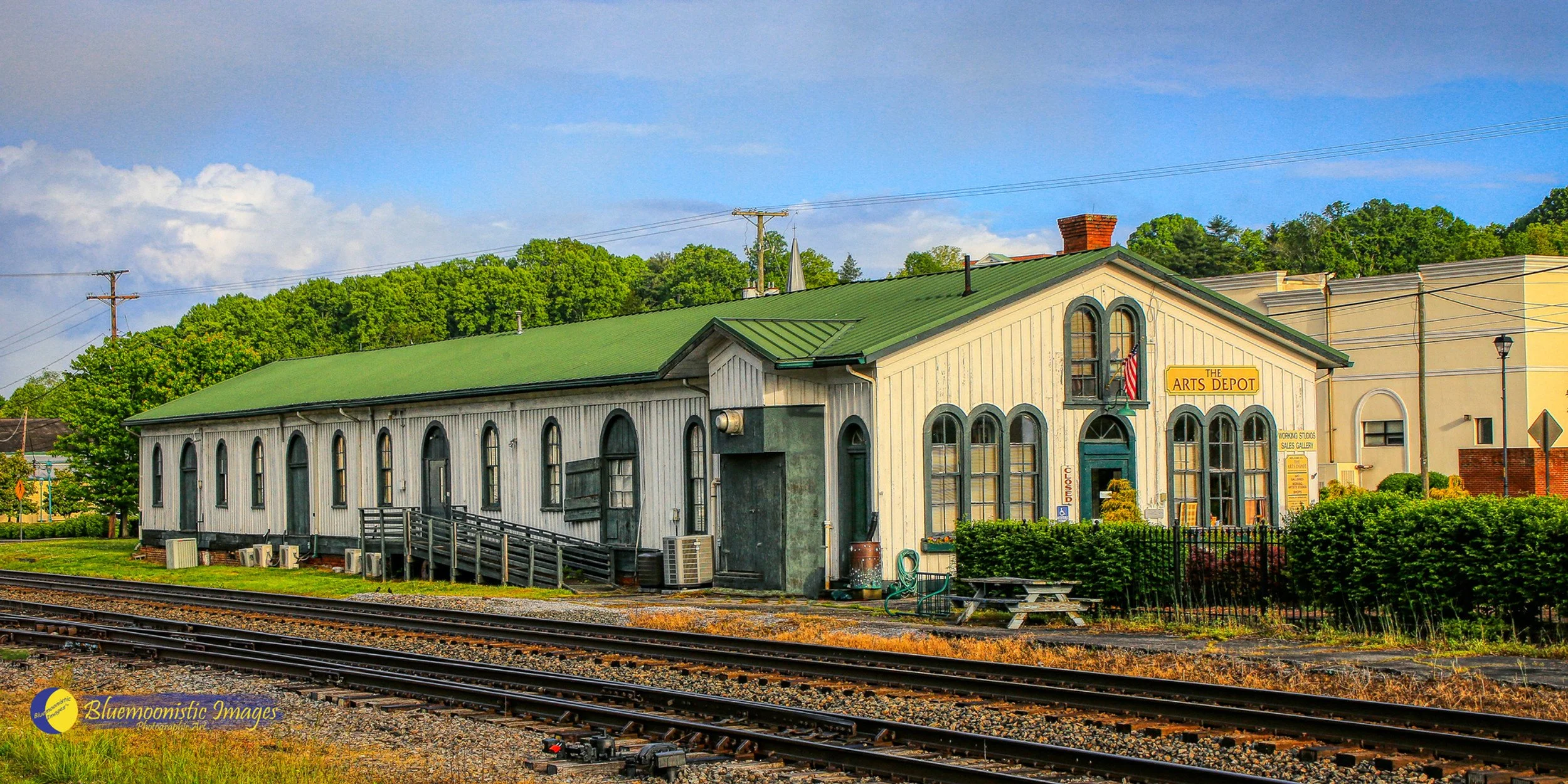
Before it held paint, pottery, and stained glass, the building that houses the Arts Depot spent its working life moving freight. Built sometime in the 1860s or 1870s as a Norfolk and Western railroad depot, it hauled goods through Abingdon for well over a century before anyone thought to fill it with artists instead of cargo. That transformation, completed in 1990 through a volunteer-driven community effort, turned an aging piece of railroad infrastructure into one of the more interesting stops in downtown Abingdon.
From Freight Station to Working Studios
What sets the Arts Depot apart from a typical gallery is that the artists here are usually actually present, actually working. The building currently houses somewhere around six to seven active studios alongside three galleries, and on most days you'll find a potter at the wheel, a painter mid-canvas, or a jeweler working through a piece at the bench. That's a different experience than walking through a gallery of finished work with no sense of how any of it came together.
The building's railroad past is still visible if you know to look for it. The bones of the old depot, its proportions, its industrial simplicity, give the space a character that a purpose-built gallery couldn't replicate. It's a good example of Abingdon's broader habit of repurposing its old buildings rather than tearing them down, letting each one carry its history forward into a new use.
The building's origins connect it directly to the Norfolk and Western Railway, a line that played a major role in developing Southwest Virginia's economy through the late 19th and early 20th centuries, hauling coal, timber, and agricultural goods through towns like Abingdon that otherwise sat somewhat removed from the region's larger commercial centers. When rail freight through this specific depot eventually declined, the building sat unused for a period before the 1990 restoration effort gave it new purpose. That transformation didn't happen through a single wealthy donor or a top-down development plan. It happened through sustained volunteer work from people in the community who saw value in saving the building rather than letting it fall apart or be demolished, which is a detail worth knowing if you want a fuller sense of how much of Abingdon's historic fabric survived through similarly grassroots efforts.
What You'll Find Inside
Expect a mix of pottery, painting, textiles, jewelry, and mixed media work, much of it reflecting the surrounding Appalachian landscape and craft traditions. Because the studios rotate and change over time, no two visits look quite the same. If you're in the market for something handmade and genuinely local, rather than something mass-produced and shipped in, this is one of the better places downtown to find it.
The Depot also plays host to community events and exhibitions throughout the year, so it's worth a quick check of what's on before you visit if you want to catch something beyond the regular studio activity. Many of the resident artists also offer classes and workshops periodically, giving visitors with a longer stay in town the chance to try their hand at a craft rather than just observe it. This kind of hands-on option tends to appeal especially to visitors staying multiple nights who want an activity that goes beyond typical sightseeing.
Because the studios operate somewhat independently within the shared building, hours can vary slightly between artists. Weekday afternoons and weekend mornings tend to be reliable times to find the most studios open and staffed, though this can shift seasonally, so a quick look at the Depot's current hours before you visit is a reasonable habit if you have a specific artist or type of work you're hoping to see.
How the Depot Connects to Abingdon's Wider Arts Scene
The Arts Depot doesn't exist in isolation. It sits within an unusually dense cluster of arts institutions for a town this size, alongside the William King Museum of Art a short distance away and the Barter Theatre anchoring the other end of downtown. Together, they give Abingdon a claim to being a genuine regional arts destination rather than a town with one standout attraction and little else. Visitors who make time for all three tend to come away with a much fuller picture of just how much creative activity this small Appalachian town supports.
A Low-Key, High-Value Stop
Unlike some of Abingdon's larger attractions, the Arts Depot doesn't require much planning. There's no ticket, no set tour time, just a building full of working studios you can wander through at your own pace. Give it thirty minutes to an hour, more if you strike up a conversation with one of the artists, which happens often enough that you should leave room for it in your schedule.
Its location makes it an easy addition to a downtown walking day. It sits close enough to Main Street and the rest of the historic district that you can fold it into a loop that also includes the Barter Theatre, the William King Museum, and Sinking Spring Cemetery without much extra walking.
Fitting It Into Your Day
If you're staying at Moore on Main on East Main Street, the Arts Depot is an easy walk, which makes it a natural stop on a slower morning or a wind-down activity in the late afternoon once the bigger attractions have closed for the day. It also pairs well with a meal on either end. A quiet dinner at Dawn & Dusk after an afternoon spent talking with local artists gives the day a good close, and the menu is worth checking ahead of time at mooreonmain.com/dawn-dusk if you're trying to time things around it.
Why It's Worth Your Time
The Arts Depot won't take up your whole afternoon, and it doesn't need to. What it offers is a genuine look at the people actually making the art that fills Abingdon's galleries and shops, working inside a building that has its own century-and-a-half of local history behind it. For visitors who want more than a passive look at finished work, the chance to watch it happen, and talk to the people doing it, makes this one of the more memorable stops in town.
